
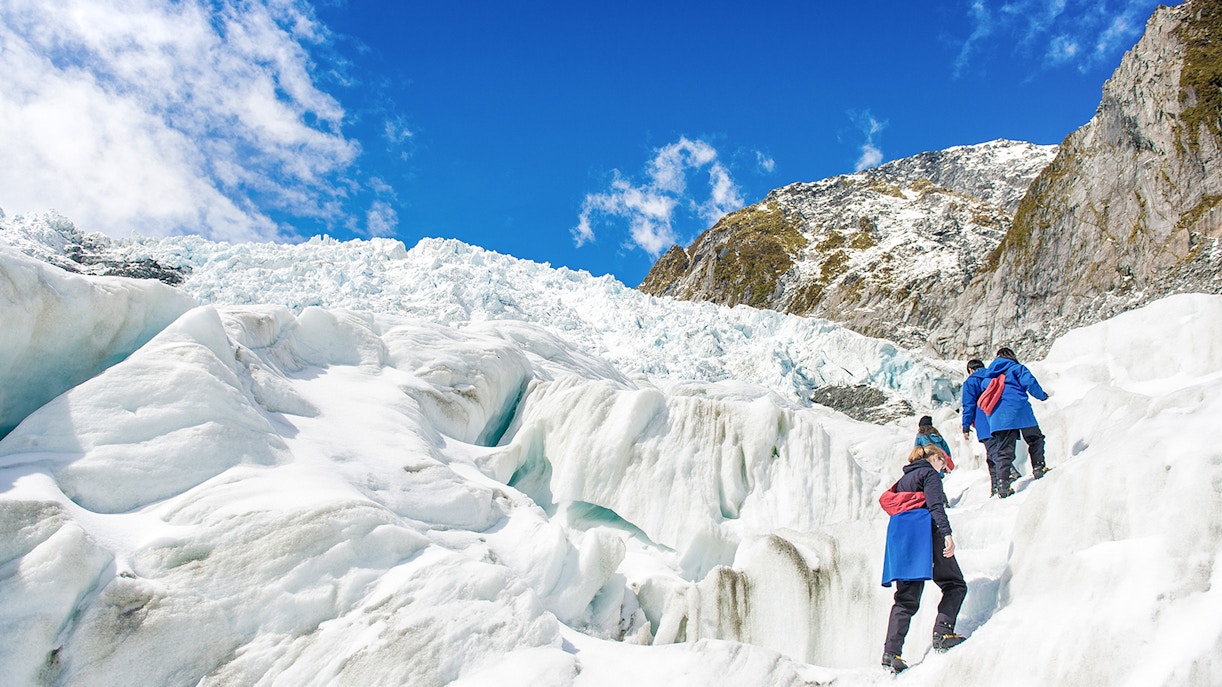
The Franz Josef Glacier, located in New Zealand's Westland Tai Poutini National Park, is one of the fastest-moving glaciers in the world, advancing up to 50 cm daily. This 12 km long glacier descends from the Southern Alps into a beautiful tropical rainforest, creating a striking contrast. You'll be able to see ice caves, crevasses, and beautiful blue ice formations as you explore the glacier. Historically significant, the glacier is named after Emperor Franz Josef I of Austria. Its rapid movement and accessibility make it a vital study site for glaciologists and a popular tourist destination, contributing significantly to the region’s economy and understanding of glacial dynamics.
Uncover Franz Josef Glacier's natural beauty and learn all about this wondrous glacier!
Nestled in New Zealand's Westland Tai Poutini National Park, Franz Josef Glacier is a natural marvel that offers a rare glimpse into the power and beauty of glacial landscapes. Unlike most glaciers worldwide, Franz Josef descends into a lush, temperate rainforest, creating a dramatic contrast that is both captivating and unique. You’ll get to explore ice caves, crevasses, and stunning blue ice formations. This page will provide detailed information about Franz Josef Glacier, including the best times to visit, how to get there, and essential tips to make your visit unforgettable. Dive in to discover all the vital details and exciting Franz Josef attractions.
What is Franz Josef Glacier?
Quick facts about Franz Josef Glacier
- Official name: Franz Josef Glacier / Kā Roimata o Hine Hukatere
- Location/Address: Te Ao Marama, Glacier Base, 63 Cron Street, Franz Josef Glacier, 7886, New Zealand
- Date of opening: Naturally formed; accessible to tourists since the 19th century
- Timings: Open year-round; guided tours typically run from 8 AM to 5 PM
- UNESCO World Heritage Site: Declared as part of Te Wahipounam, South West, New Zealand, in 1990
- Number of visitors per year: Approximately 250,000
- Experiences: Franz Josef Heli Hike, Franz Josef Heli tour
Plan your visit to Franz Josef Glacier
Where is Franz Josef Glacier?
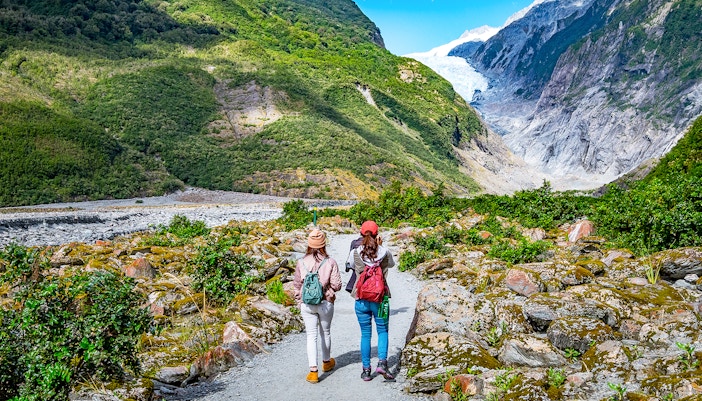
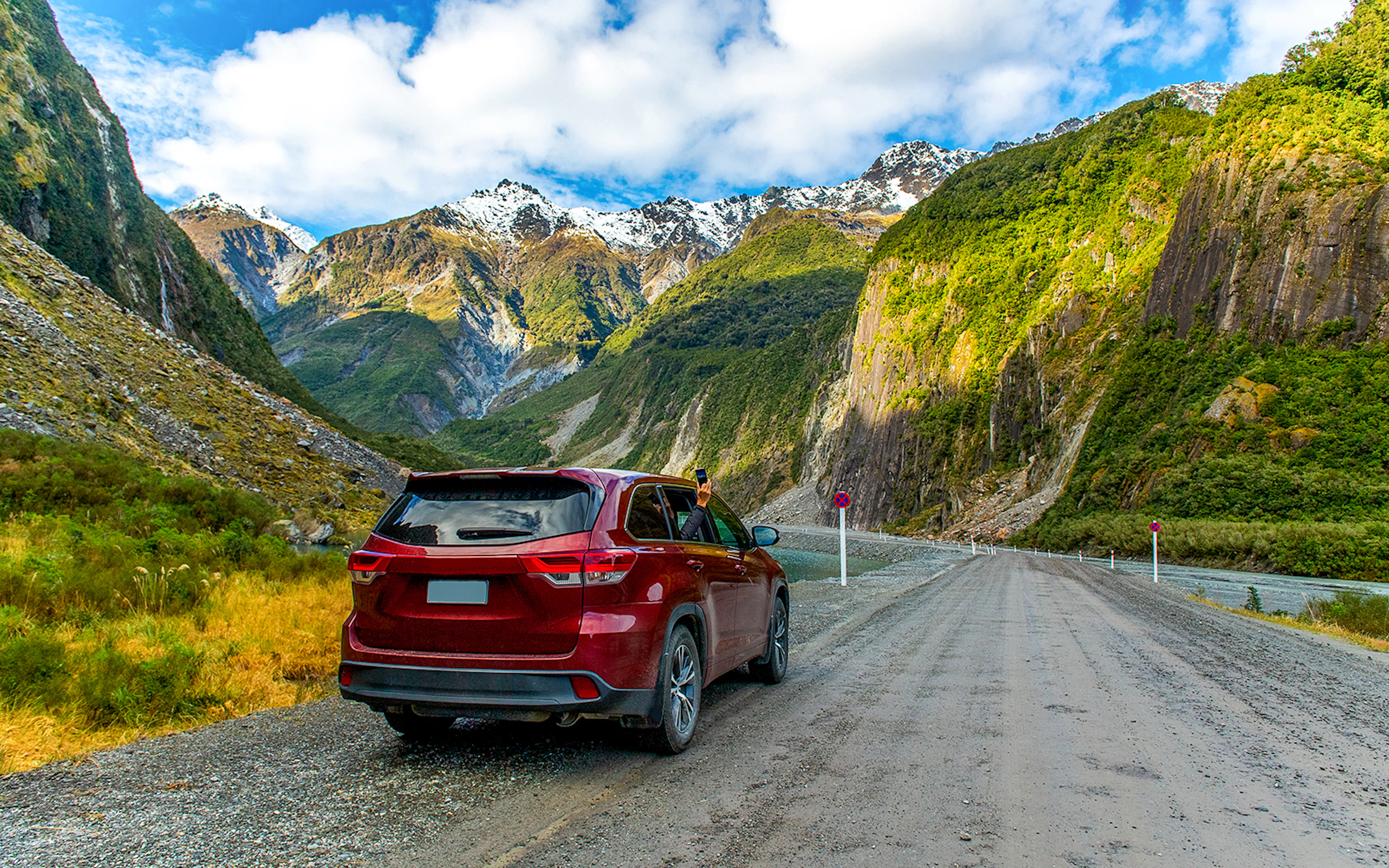
- Franz Josef Glacier is located in Westland Tai Poutini National Park on New Zealand’s South Island. It is near Franz Josef, a small town surrounded by greenery and the Waiho River. The glacier is accessible via State Highway 6, which is surrounded by breathtaking alpine scenery.
- Address: Te Ao Marama, Glacier Base, 63 Cron Street, Franz Josef Glacier, 7886, New Zealand
- Find on map
Franz Josef Glacier's opening hours
- Opening hours: Franz Josef Glacier is accessible year-round. Guided tours typically operate from 8am to 5pm.
- Closed dates: The glacier and tours are generally open year-round but may close on specific public holidays such as Christmas and New Year's Day. Always check with tour operators for any particular closures.

Best time to visit Franz Josef Glacier
- Summer: Best for overall accessibility and a range of activities. Melting ice causes dramatic formations but is more suited for experienced hikers. Longer daylight hours and warmer weather are ideal for most activities.
- Autumn: Beautiful scenery with moderate weather. Ideal for visitors who prefer a quieter experience.
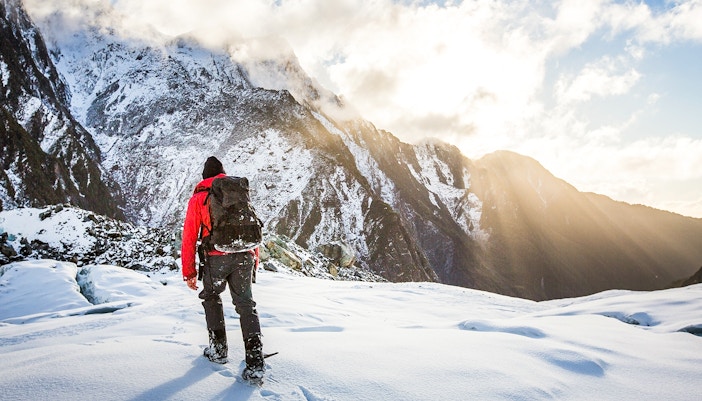
- Winter: Offers a unique and serene glacier experience. Perfect for helicopter tours and viewing the pristine, snowy landscape.
- Spring: Spring is a great time to explore the glacier, as the melting ice creates stunning ice formations and the surrounding landscapes come alive with greenery.
Why visit Franz Josef Glacier?
1/8
Unique glacial experience
Witness the rare phenomenon of a glacier descending into a temperate rainforest, creating a stunning visual contrast.
Ice adventures
Explore ice caves, crevasses, and striking blue ice formations on guided glacier hikes or helicopter tours.
Rich history
Learn about the glacier’s significance, named after Emperor Franz Josef I of Austria, and its importance to local Maori culture.
Fast-moving wonder
Observe one of the world's fastest-moving glaciers, advancing up to 50 cm daily, offering ever-changing landscapes.
UNESCO World Heritage Site
Visit a globally recognized natural wonder in the Te Wahipounamu – South West New Zealand World Heritage Area.
Scenic helicopter tours
Take an exhilarating helicopter tour and enjoy expansive views of the surrounding Southern Alps and glaciers.
Educational insights
Learn about glacial dynamics and climate change through informative tours and exhibits.
Adventure activities
Engage in thrilling activities like heli-hiking, ice climbing, and scenic flights for a memorable adventure.
History of Franz Josef Glacier
Franz Josef Glacier, also known as Kā Roimata o Hine Hukatere in Māori, has a rich history and cultural significance. Julius von Haast named it after the Austrian Emperor Franz Josef I in 1865. Its formation dates back around 7,000 years, originating from the accumulation of snow in the Southern Alps. The glacier holds deep cultural importance for the Māori, particularly the Ngāi Tahu tribe. According to Māori legend, the glacier represents the frozen tears of Hine Hukatere, a woman whose lover died in an avalanche.
In modern times, the glacier has become a major tourist attraction due to its accessibility and rapid movement, making it one of the fastest glaciers globally. The glacier has undergone periods of advance and retreat, with significant growth noted from the 1980s to the early 2000s before retreating again in recent years.
How does ice move on Franz Josef Glacier?
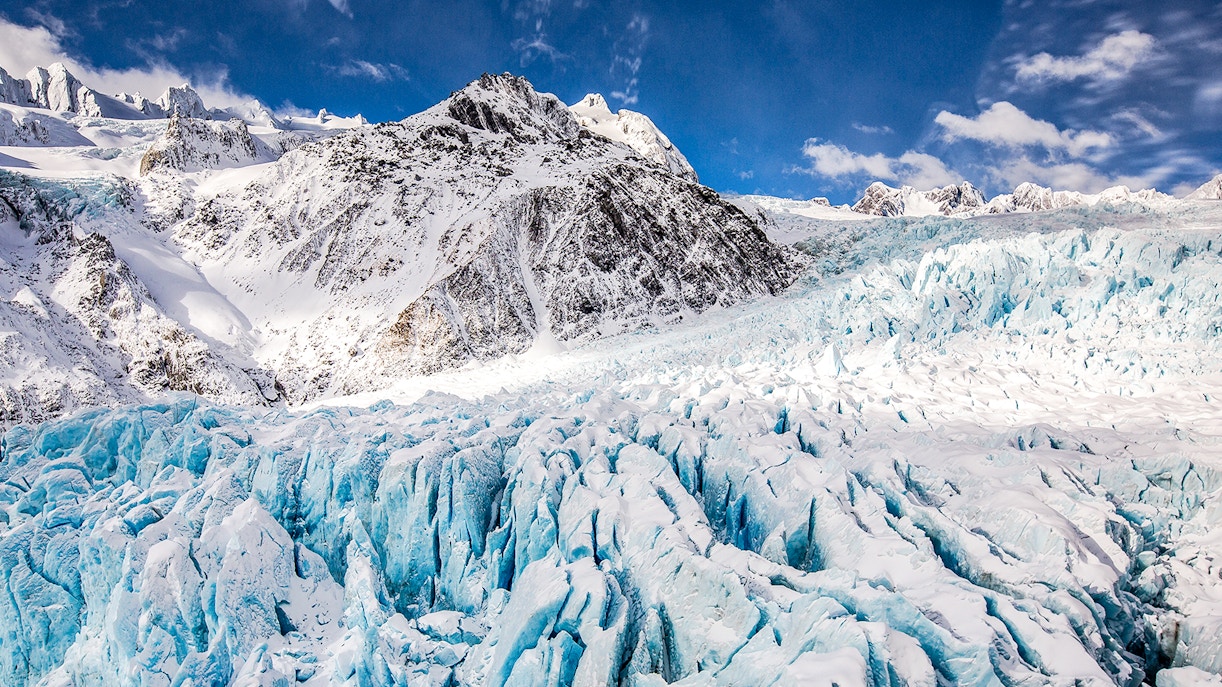
Fox Glacier, located in Westland Tai Poutini National Park on the West Coast of New Zealand's South Island, features a variety of intriguing geographical aspects. The glacier is known for its dynamic movement, being one of the world's fastest-moving glaciers. It advances and retreats in response to the volume of snowfall and meltwater. This rapid movement, sometimes over a meter per day, creates stunning ice formations such as crevasses and ice caves, making it a fascinating natural spectacle for visitors.
Frequently asked questions about Franz Josef Glacier
You'll be able to enjoy a variety of activities, including guided glacier hikes, heli-hiking, scenic helicopter flights, and ice climbing. Additionally, e-bike and hiking tours are available for those who prefer exploring the valley at a slower pace.
Heli-hikes are guided by professional and experienced guides who provide all necessary equipment and safety instructions. The tours are designed to accommodate beginners, ensuring a safe and enjoyable experience for all participants.
You can explore the numerous walking and hiking trails around the glacier for free. Popular options include the Franz Josef Glacier Valley Walk and the Tatare Tunnels Walk. Additionally, you can visit the nearby town of Franz Josef for scenic views and enjoy local cafes and shops.
Both glaciers offer unique experiences. Franz Josef Glacier is known for its glorious blue ice, accessibility, and dramatic descents into the rainforest. Fox Glacier, slightly longer, offers a more tranquil experience with fewer tourists. Your choice may depend on the type of experience you prefer: more vibrant and popular at Franz Josef or quieter and more serene at Fox Glacier.
Yes, Franz Josef Glacier is accessible year-round. However, the best time to visit is during the summer months (November to February) when the weather is more favorable for outdoor activities. Winter visits can still be rewarding but come with colder temperatures and potential weather-related restrictions.
Dress in warm, layered clothing suitable for cold conditions. Wear sturdy, waterproof boots with good ankle support. Tour operators usually provide additional gear such as crampons, jackets, and gloves. Sunglasses and sunscreen are also recommended to protect against the sun’s glare on the ice.
Franz Josef Glacier is located on the West Coast of New Zealand’s South Island. The nearest major town is Greymouth, which is approximately a 2-hour drive away. Regular bus services and rental car options are available. The glacier is accessible via State Highway 6.
Most guided glacier hikes have age restrictions, typically allowing children from the age of 8 and above. Fitness requirements vary by tour; some hikes are suitable for beginners with moderate fitness levels, while others may require more strenuous effort. Always check with the tour operator for specific requirements.
Yes, you can view Franz Josef Glacier from various lookout points without a guided tour. The Franz Josef Glacier Valley Walk is a popular self-guided trail that leads to a viewpoint near the glacier’s terminal face. However, access to the ice itself is restricted to guided tours for safety reasons.
The area around Franz Josef Glacier is home to diverse wildlife, including kea parrots, the world’s only alpine parrot, and other bird species. You may also spot native forest birds, and in the nearby waters, you can sometimes see seals and dolphins.


